
How Much Space Do You Need Around a Backyard Playset
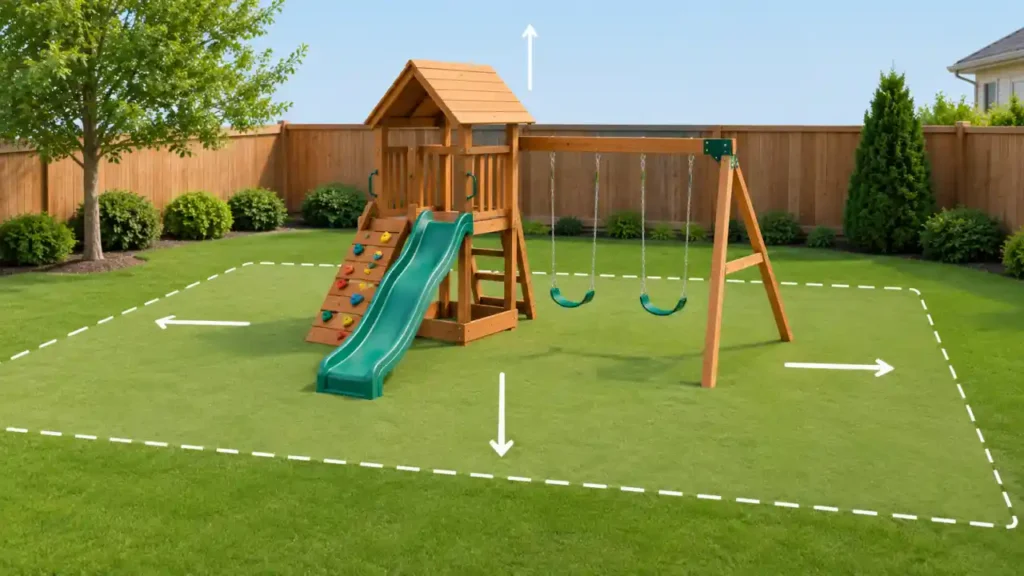
A backyard playset can give children a place to climb, swing, slide, and enjoy outdoor activities. Before installing one, though, you need to make sure your yard has enough room for the equipment and the space children need to use it safely. A playset might fit between your fence and patio, but that doesn’t always mean it’s suitable for that location.
The space required depends on the playset’s size, the features it includes, and the manufacturer’s installation guidelines. Swings need room to move, slides require a clear exit area, and climbing equipment needs unobstructed access. You’ll also need to consider the ground surface, nearby trees, fences, and other potential hazards.
Planning these details before buying a playset can help you avoid installation problems and create a backyard play area that works for your family.
How Much Space Do You Need Around a Backyard Playset?
Many residential playsets need additional clearance around their frames, but there’s no single measurement that works for every model. A clearance of six feet is a common starting point for some playground equipment, although specific requirements vary by feature and manufacturer.
The first thing to understand is the difference between the playset’s footprint and its total required installation area.
The footprint is the ground area occupied by the equipment itself. The total installation area includes the footprint plus the surrounding space needed for safe movement, access, and protective surfacing.
For example, imagine a playset measuring 12 feet wide and 10 feet deep. Its footprint is 120 square feet. If the manufacturer’s instructions require six feet of clearance on every side, the overall planning area would be 24 feet wide and 22 feet deep, or 528 square feet.
This is only an illustrative calculation. Swing paths, slide exits, and other features may require different clearances, so always check the instructions for your specific model before finalizing the layout.
How Much Clearance Does Each Playset Feature Need?
Different playset features create different space requirements. Measuring the frame alone won’t account for every area children use while playing.
Swing Set Clearance
Swings need enough room to move forward and backward without striking a fence, tree, wall, or another structure. The area beneath and around the swings also needs appropriate protective surfacing.
The U.S. Consumer Product Safety Commission (CPSC) recommends that protective surfacing for traditional to-and-fro swings extend in front of and behind the swing by a distance equal to twice the height of the swing’s top bar above the ground.
For example, if the top bar is eight feet high, the recommended front-and-back protective surfacing distance is 16 feet from the point directly beneath the bar. This measurement concerns the swing’s protective area, not simply the distance from the edge of the playset frame.
Check the manufacturer’s installation manual for the exact layout, including side clearance and spacing between adjacent swings.
Slide Clearance
A slide needs a clear area at its exit so children can get off without running into obstacles or other play equipment. The amount of space depends on the slide’s height, length, design, and installation instructions.
Before choosing a location, look at the direction the slide faces. A slide pointed toward a fence or narrow walkway may make an otherwise suitable yard difficult to use.
Leave the required landing area unobstructed, and make sure the protective surfacing continues through the appropriate impact zone.
Climbing Walls, Ladders, and Monkey Bars
Climbing features need room for children to approach, climb, and get down safely. Monkey bars and elevated platforms also create fall zones that must be considered when planning the surrounding space.
Avoid placing these features where children could fall directly onto concrete, paving stones, exposed roots, or other hard surfaces. Follow the manufacturer’s requirements for protective surfacing and clearances around elevated equipment.
Overhead Clearance
Ground measurements aren’t the only consideration. Tree branches, roof overhangs, utility lines, and other overhead obstructions can create hazards above a playset.
Check the full height of the equipment, including raised platforms, swings, and climbing attachments. Keep the play area away from overhead utility lines, and consult the relevant utility provider when necessary.
How to Measure Your Backyard Before Installing a Playset
Measuring your yard before purchasing equipment helps you choose a playset that fits without sacrificing necessary safety space.
Step 1: Measure the Usable Area
Measure the width and depth of the part of your backyard where you plan to install the playset. Don’t assume the entire lawn is available. Patios, garden beds, trees, drainage areas, and pathways may limit the usable space.
If the yard has an irregular shape, measure the individual sections separately and sketch a simple plan.
Step 2: Check the Playset Dimensions
Review the product specifications and installation manual. Record the overall width, depth, and height, including features that extend beyond the main frame.
Pay particular attention to swing beams, slide exits, climbing walls, and attached ladders. These features can affect the amount of room needed even when the main structure is relatively compact.
Step 3: Mark the Required Safety Zones
Use stakes, string, or temporary markers to outline the equipment footprint and the required clearance areas.
Mark the swing movement area and slide landing zone separately where necessary. This gives you a better idea of how the finished playset will fit than simply measuring the frame against the lawn.
Step 4: Check for Nearby Obstacles
Look for fences, sheds, retaining walls, trees, outdoor furniture, and other structures near the proposed location.
A clear path into and out of the play area is also useful. Make sure children can move between features without being directed toward obstacles or other hazards.
Step 5: Review the Ground and Drainage
Playsets generally need a stable installation surface that meets the manufacturer’s requirements. Uneven ground can affect the stability of the structure, while poor drainage can leave the play area wet or muddy.
Don’t level a sloped yard by improvising changes to the frame or supports. Follow the installation instructions and seek qualified help if the site requires substantial preparation.
What Type of Safety Surfacing Do You Need?
Protective surfacing helps reduce the severity of injuries when children fall. The correct material and coverage depend on the equipment’s fall height and the type of surface selected.
Common options include engineered wood fiber, suitable playground mulch, rubber playground tiles, and poured-in-place rubber. Each has different installation, drainage, maintenance, and depth requirements.
Grass may look soft, but ordinary grass and soil can become hard with use and changing weather. Grass and soil may feel soft, but they can become firm over time or in dry weather, so they might not provide enough cushioning to protect children from falls off elevated play equipment.
When planning the surfacing, account for the required fall zones around the playset, not just the area directly beneath its frame. Check the CPSC’s residential playground safety guidance and the manufacturer’s instructions to determine the appropriate material and coverage.
Keep the surface in good condition after installation. Materials such as playground mulch may need topping up or spreading evenly from time to time, while rubber and other surfaces should be checked regularly for cracks, worn areas, or loose sections.
Can You Fit a Playset in a Small Backyard?
Yes, a smaller backyard can accommodate some playsets, provided the complete installation area meets the equipment’s requirements.
Start by choosing a structure that suits the usable space rather than selecting the largest model that fits on paper. A compact playset without swings may be easier to accommodate than a larger structure with several moving features.
Positioning the slide and climbing entrance thoughtfully can help you make better use of the available backyard space. However, changing the orientation won’t eliminate required safety clearances.
If space is limited, consider these practical options:
- Choose a smaller playset with fewer attached features.
- Look for a configuration that suits the shape of your yard.
- Keep the required use zones away from patios, fences, and garden beds.
- Measure the full installation area before ordering equipment.
- If you can’t provide enough room for the required safety clearances, consider installing the playset somewhere else.
Never reduce a manufacturer’s specified clearance simply to make a playset fit into a tight space.
Common Backyard Playset Installation Mistakes
A few planning mistakes can create unnecessary difficulties after the equipment arrives.
Measuring only the frame: The equipment may fit while the swing paths and slide exit don’t. Calculate the complete installation area before buying.
Placing the playset too close to a fence: Children need the required clearance around the equipment, and nearby barriers can create collision hazards.
Ignoring protective surfacing: Installing a playset on an attractive lawn doesn’t guarantee adequate fall protection. Select a protective ground surface that matches the playset’s design and the height from which a child could fall.
Overlooking overhead hazards: Tree branches and utility lines can interfere with safe use, even when the ground layout looks correct.
Installing on unsuitable ground: An unstable or poorly prepared surface can affect the structure’s stability. Follow the manufacturer’s foundation and anchoring instructions.
Skipping the installation manual: Different playsets have different requirements. General clearance guidelines shouldn’t replace the instructions supplied with the actual equipment.
Backyard Playset Space Planning Checklist
Before buying or installing your playset, confirm that you’ve:
- Measured the usable backyard.
- Checked the playset’s overall dimensions.
- Accounted for swings, slides, and climbing features.
- Marked the required safety and use zones.
- Checked for nearby and overhead obstacles.
- Selected suitable protective surfacing.
- Considered ground stability and drainage.
- Reviewed the manufacturer’s installation instructions.
Conclusion
The amount of space needed around a backyard playset depends on its design, features, and required safety clearances. Measuring the equipment alone isn’t enough. You also need to account for swing movement, slide exits, climbing areas, protective surfacing, and nearby obstacles.
Start by measuring your usable yard, then compare those dimensions with the playset’s specifications and installation instructions. If your yard can’t accommodate the full safety zone, consider a smaller playset or find a location with enough room to meet the recommended clearance requirements.
If you’re planning a backyard play area and need help with professional playset assembly in las vegas, Getz Handyman can be your next point of contact for assistance with your installation needs. Make sure the selected location and ground preparation are suitable before assembly begins.