
Does Popcorn Ceiling Have Asbestos? How to Tell for Sure
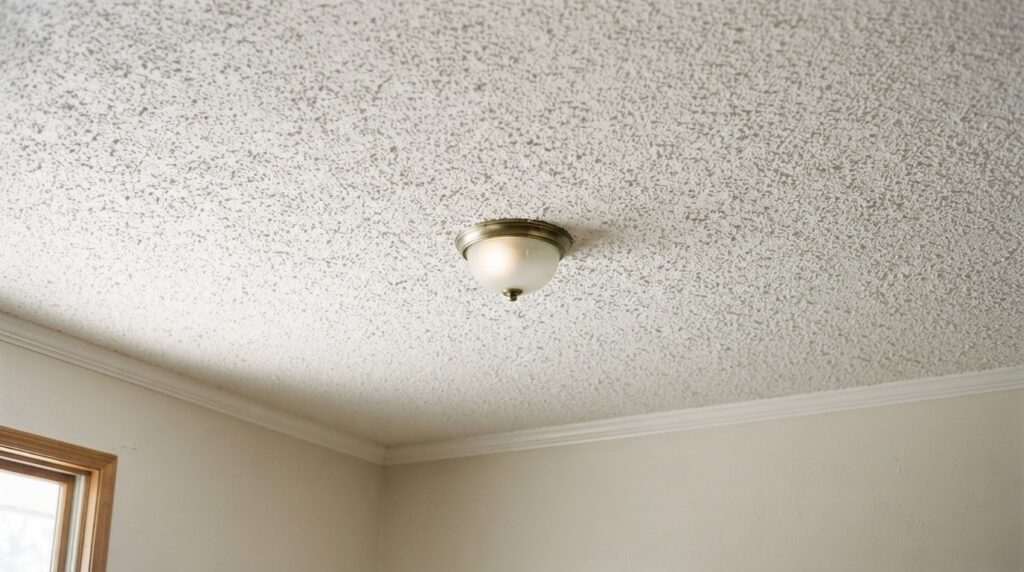
Does popcorn ceiling have asbestos? Sometimes. Many popcorn (acoustic) ceilings sprayed on before the mid-1980s contain asbestos, while most applied after that do not. You can’t tell by looking at it, so the only way to know for sure is to have a sample tested by an accredited lab before you scrape, sand, drill or remodel.
The good news: an intact, undisturbed popcorn ceiling is generally considered low risk. The danger comes when the texture is damaged or removed and fibers get into the air. Here’s how to figure out whether your ceiling is a concern, how testing works, and what your options are either way.
Why Did Popcorn Ceilings Contain Asbestos?
From the 1950s into the 1980s, builders loved spray-on acoustic texture. It hid drywall seams and flaws, softened echoes, and went up fast. Asbestos was a common ingredient because it added bulk, fire resistance and durability at a low cost.
Federal rules banned asbestos in textured ceiling products in the late 1970s, but existing stock could still be sold and installed for years afterward. That’s why a home built in the early or mid-1980s can still have an asbestos ceiling, and why the build date is a clue, not a guarantee.
Which Homes Are Most Likely to Have Asbestos Popcorn Ceilings?
Use your home’s age as a rough guide:
| When the ceiling was applied | Asbestos likelihood | What to do |
|---|---|---|
| Before 1980 | Higher | Assume it may contain asbestos and test before any work |
| 1980 to about 1990 | Possible | Test before any work, since older stock was still in use |
| After about 1990 | Low | Testing is still the only way to be certain |
In the Las Vegas Valley, much of the housing was built after 1990, so many homeowners have newer, asbestos-free texture. But older neighborhoods closer to the city’s core, along with established parts of Henderson and North Las Vegas, have plenty of homes from the 1970s and 1980s. If you don’t know when your ceiling was sprayed, or it was re-textured at some point, treat it as unknown and test.
How Can You Tell If a Popcorn Ceiling Has Asbestos?
Asbestos fibers are microscopic, and an asbestos ceiling looks exactly like a safe one. Color, texture and sparkly flecks tell you nothing. Lab analysis is the only reliable answer.
Option 1: Hire a certified asbestos inspector
This is the safest route. A certified inspector takes samples properly, seals the spots, and sends the material to an accredited lab. You get a written report, which is useful if you’re selling, remodeling or pulling permits.
Option 2: Mail-in sample kit
Some homeowners take their own sample and mail it to a lab. It costs less, but scraping the ceiling is exactly the kind of disturbance you’re trying to avoid. If you go this way, follow the lab’s instructions closely:
- Pick an out-of-the-way spot, such as a closet ceiling.
- Turn off the HVAC and fans so dust doesn’t circulate, and keep kids and pets out of the room.
- Put down plastic sheeting and wear a properly fitted respirator and disposable gloves.
- Lightly mist the spot with water to keep dust down.
- Scrape a small sample directly into a sealable bag, then seal it and label it.
- Patch the sampled spot so no loose material is left exposed.
- Wet-wipe the area and dispose of the plastic and wipes as the lab directs.
Skip store-bought “instant” test strips. Only an accredited lab analysis gives a result you can rely on.
Is an Asbestos Popcorn Ceiling Dangerous?
Asbestos is mainly a risk when fibers are released and inhaled. Long-term exposure is linked to serious lung diseases, including mesothelioma and lung cancer. According to the U.S. EPA’s asbestos guidance, material in good condition that won’t be disturbed is often best left alone.
Watch for situations that turn a low-risk ceiling into a problem:
- Water damage: a roof or AC leak can soak the texture and make it crumble. Desert monsoon storms and rooftop AC condensate lines are common culprits.
- Flaking or peeling texture that drops onto floors and furniture.
- Drilling or cutting to add a ceiling fan, recessed lights or a smoke detector.
- Sanding, scraping or power-washing the ceiling.
- Remodels that remove walls or ceiling drywall.
What Are Your Options If It Tests Positive?
A positive test doesn’t mean you have to tear everything out tomorrow. You generally have three choices:
Leave it alone
If the ceiling is intact and you have no plans to work on it, leaving it in place is a legitimate option. Avoid hanging things from it, cleaning it aggressively or letting it get wet.
Encapsulate or cover it
Sealing the texture with an encapsulating coating, or covering it with new drywall or ceiling panels, keeps fibers locked in place. Fastening a new layer still disturbs the old ceiling, so this work should be done or overseen by trained asbestos professionals.
Professional abatement
Full removal of asbestos texture should be handled by a licensed asbestos abatement contractor who uses containment, wet methods, air filtration and proper disposal. Nevada and Clark County have asbestos rules that can apply to renovation work, so check current requirements before a remodel. Do not scrape an asbestos ceiling yourself.
What If Your Ceiling Tests Negative?
Then you’re free to update it. Removing asbestos-free popcorn texture usually means protecting floors and walls, misting the texture, scraping it off, then skim-coating, sanding, priming and painting for a smooth finish. It’s messy, overhead work, and the finishing is where most DIY jobs fall short.
Once you have a negative lab result, our popcorn ceiling removal service can scrape, smooth and refinish the ceiling for you.
What drives the cost of removal? Mainly ceiling square footage and height, whether the texture was ever painted (painted texture is much harder to soften), how much furniture needs protecting, the level of smooth finish you want, and whether you add ceiling painting and color matching afterward.
Frequently Asked Questions
What year did they stop using asbestos in popcorn ceilings?
Asbestos in textured ceiling products was banned in the late 1970s. However, existing supplies were still installed into the 1980s, so homes built up to around 1990 should be tested before any work.
Can you paint over a popcorn ceiling with asbestos?
Painting can act as a form of encapsulation, but rolling or spraying can loosen texture and release fibers. Talk to an asbestos professional first rather than treating it as a casual DIY paint job.
Is it safe to live in a house with an asbestos popcorn ceiling?
Generally yes, as long as the ceiling is intact and undisturbed. The risk rises when it’s damaged, wet, flaking or worked on, so keep an eye on its condition.
How long does asbestos testing take?
Many labs return results within a few business days, and some offer rush service. Turnaround depends on the lab and the testing method, so ask when you book.
Ready to Get Rid of That Popcorn Ceiling?
If your ceiling has tested negative and you’re ready for a clean, modern look, Getz Handyman can help. Request a free quote online or call us at (702) 497-8423 to talk through your project.