
How High to Install Grab Bars: Toilet, Shower and Tub
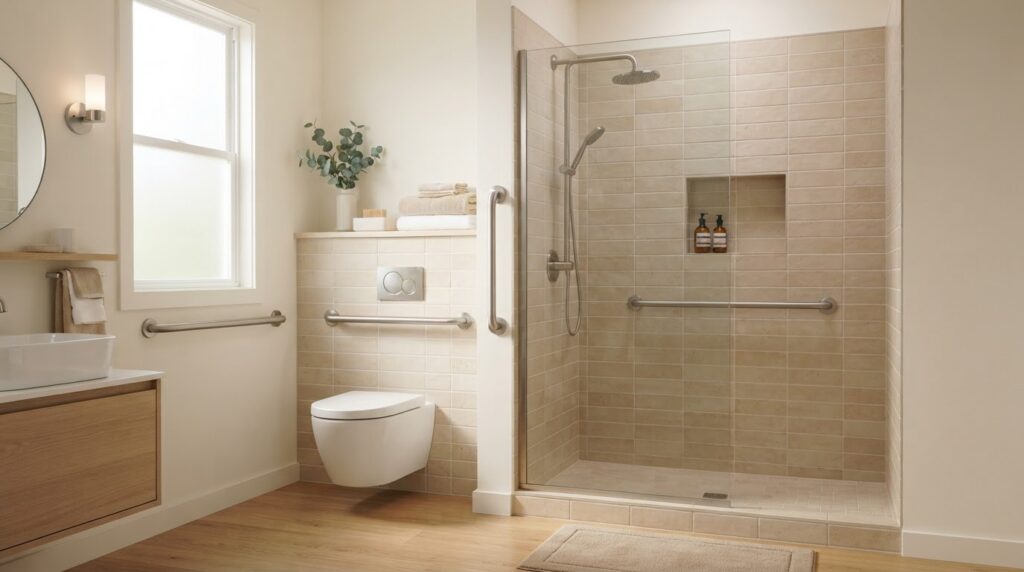
If you’re wondering how high to install grab bars, the standard answer is 33 to 36 inches above the finished floor, measured to the top of the bar. That range comes from the ADA accessibility standards and works for most adults by the toilet, in the shower and along the bathtub wall. The main exception is a lower bar in a tub, which usually sits 8 to 10 inches above the rim.
Height is only half the job, though. A grab bar placed at the right spot but anchored into drywall alone can pull out the moment someone leans on it. Below, we cover the right height for each bathroom location, how to adjust it for the person using it, and how to mount bars so they actually hold.
What Is the Standard Grab Bar Height?
Under the 2010 ADA Standards (section 609.4), horizontal grab bars go 33 inches minimum to 36 inches maximum above the floor. The measurement is taken to the top of the gripping surface, not the center of the bar or the mounting screws. Measuring to the screws is one of the most common reasons bars end up too low.
The ADA rules are written for public and commercial buildings, so they aren’t legally required in a private home. They’re still the best guide for how high to install grab bars at home, because they’re based on what most seated and standing adults can reach and push down on safely. The U.S. Access Board’s guide to accessible bathing rooms shows the layouts with diagrams if you want to see them.
Grab Bar Heights by Location
Here’s a quick reference for the most common spots in a home bathroom:
| Location | Typical height (top of bar) | Notes |
|---|---|---|
| Toilet side wall | 33–36 in. above floor | At least 42 in. long, starting no more than 12 in. from the back wall |
| Toilet back wall | 33–36 in. above floor | At least 36 in. long; keep it clear of the tank lid |
| Shower walls | 33–36 in. above shower floor | Horizontal bar on the back and/or control wall |
| Bathtub, upper bar | 33–36 in. above tub floor | Along the long back wall |
| Bathtub, lower bar | 8–10 in. above tub rim | Helps when sitting down or standing up in the tub |
| Vertical entry bar | Set to the user’s natural reach | Just inside the tub or shower opening |
Next to the Toilet
A horizontal bar on the side wall is the most useful single bar in most bathrooms, because it gives leverage for both sitting down and standing up. If the toilet has no side wall, a floor-mounted or fold-down bar is the usual alternative. Keep the toilet paper holder below the bar so it doesn’t block your grip.
In the Shower
Put a horizontal bar on the wall you face or lean toward while washing, at 33–36 inches. If someone uses a shower seat, a bar on the wall next to the seat makes transfers much safer.
At the Tub or Shower Entry
Many slips happen while stepping over a tub edge or shower curb. A vertical bar, often 18 to 24 inches long, mounted a few inches inside the opening gives a steady handhold at whatever height your hand naturally falls while standing.
Should You Adjust the Height for the Person Using It?
Yes. In a private home, the best height is the one that fits the people who live there. The ADA range is a safe default, but a very tall or very short user, a wheelchair user, or someone recovering from surgery may do better with a slightly different placement.
- Test before drilling. Have the user stand and sit in the actual spot and mark where their hand naturally reaches with a slightly bent elbow.
- Think about the motion. Pushing down to stand up works best with a lower bar than steadying yourself while standing.
- Ask a professional. An occupational therapist can recommend exact placements for specific mobility needs.
- Plan for the future. If you’re setting up a bathroom for aging in place, it’s easier to add backing for extra bars now than to open the wall later.
How Do You Install a Grab Bar Securely?
A grab bar has to handle a sudden, heavy pull, and the ADA standard calls for bars and their mounts to resist 250 pounds of force. Towel-bar anchors won’t do that. Here’s the general process:
- Mark the height. Measure from the finished floor (or tub floor) and mark where the top of the bar will sit.
- Find the framing. Use a stud finder to locate studs or existing blocking. Studs are usually 16 inches apart on center, which is why 16-, 24- and 32-inch bars are popular.
- Use rated anchors if there’s no stud. If a flange can’t land on wood, use a heavy-duty anchor made specifically for grab bars and follow the manufacturer’s instructions exactly.
- Drill carefully through tile. Use a carbide or diamond tile bit at low speed to avoid cracking the tile.
- Seal the holes. Put silicone in and around screw holes in wet areas so water can’t get behind the tile.
- Test it. Pull and push firmly in every direction. There should be no movement at all.
Fiberglass and acrylic tub surrounds are a special case. Many can’t hold a bar on their own, so check the surround manufacturer’s guidance before drilling. If there’s plumbing behind the wall, or the wall needs to be opened and re-framed, a licensed plumber or contractor may be required for that part of the job.
If you’d rather not drill into your shower tile, our grab bar installation service handles the measuring, anchoring and sealing for you.
Common Grab Bar Mistakes to Avoid
- Mounting into drywall or tile only. Plastic anchors and bare tile won’t hold a person’s weight.
- Using a towel bar or suction-cup bar as support. Towel bars aren’t built for body weight, and suction bars can release without warning.
- Leaving too little wall clearance. The ADA calls for 1½ inches between the bar and the wall, enough room for a hand without letting an arm slip through.
- Ignoring the tile. Cracked tile or crumbling grout around a mounting spot should be fixed first. Our tile repair team can make the wall solid before a bar goes up.
One local note: hard water in Las Vegas leaves mineral spots on chrome quickly. A brushed stainless or textured finish hides spotting better and keeps its grip longer. Pairing grab bars with other bathroom accessory installation, like a handheld shower or a new toilet paper holder at the right height, can make the whole room easier to use.
Frequently Asked Questions
How high should a grab bar be next to a toilet?
The top of the bar should be 33 to 36 inches above the floor. A side-wall bar should be at least 42 inches long and start no more than 12 inches from the back wall.
Should shower grab bars be vertical or horizontal?
Both have a role. Horizontal bars help with pushing up and steadying yourself along a wall, while a vertical bar at the entry helps when stepping in and out. Many bathrooms use one of each.
Can grab bars be installed without studs?
Yes, but only with heavy-duty anchors made and rated for grab bars, installed exactly as the manufacturer directs. Standard drywall anchors are not safe for this use.
Do grab bars in a home have to meet ADA rules?
Generally no, since the ADA covers public and commercial spaces. Still, the ADA heights and strength guidelines are a smart benchmark when deciding how high to install grab bars in any home bathroom.
Get Grab Bars Installed the Right Way
Getz Handyman installs grab bars, handrails and bathroom safety upgrades for homeowners across the valley, including our Henderson handyman customers. Tell us who will be using the bars and we’ll help you place them where they’ll do the most good.
Request a free quote or call us at (702) 497-8423.