
How to Find Hidden Mold in Your House
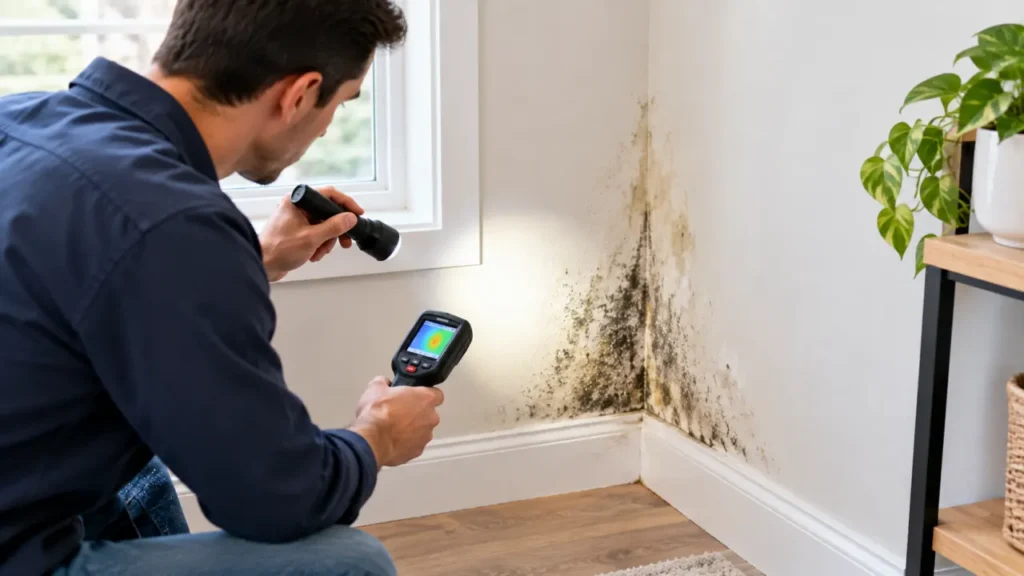
Mold doesn’t always show up as a large black or green patch on a wall. Sometimes, the first clue is a musty smell, a damp corner, peeling paint, or a stain that keeps coming back. Mold can grow behind walls, under flooring, around plumbing, and in other areas that aren’t easy to see.
Finding hidden mold starts with finding where moisture is coming from. A careful inspection can help you locate problem areas before the damage spreads.
What Is Hidden Mold?
Hidden mold is mold growing in places that aren’t visible during a normal walk through the house. It can develop inside wall cavities, beneath carpets, behind wallpaper, under cabinets, around pipes, or inside areas affected by leaks.
Mold needs moisture and a suitable surface to grow. A small plumbing leak, roof leak, condensation problem, or previous flood can leave building materials damp enough for mold to develop.
This is why simply cleaning visible mold may not solve the problem. If moisture remains behind a wall or underneath flooring, mold can return.
Signs You May Have Hidden Mold in Your House
You don’t always need to see mold to suspect there’s a problem. Several clues deserve closer attention.
A Persistent Musty or Moldy Smell
A strong earthy or musty odor can be a useful warning sign, especially when you notice it in a particular room or enclosed space. If the smell gets stronger near a cabinet, wall, closet, or floor, inspect that area carefully.
Water Stains or Discoloration
Brown, yellow, gray, or unusual dark marks on walls and ceilings may point to moisture damage. A stain that appears again after cleaning is particularly worth investigating.
Peeling Paint or Wallpaper
Paint that bubbles, cracks, or peels can indicate moisture underneath the surface. Wallpaper that lifts away from the wall can also create a space where mold grows.
Warped Materials
Swollen baseboards, buckled flooring, soft drywall, or warped wood can all be signs that moisture has entered the material.
Damp Areas and Condensation
Repeated condensation around windows, pipes, air-conditioning equipment, or other cool surfaces can create conditions that support mold growth.
Mold Keeps Coming Back
If you clean a small patch and it repeatedly returns, don’t just keep wiping it away. There may be a moisture source or hidden contamination behind the surface.
Where Hidden Mold Commonly Grows
Some parts of a house deserve extra attention because moisture tends to collect there.
Check behind drywall and wallpaper, under carpets and carpet padding, behind furniture, around windows, beneath sinks, near toilets and showers, around HVAC equipment, inside cabinets, and along baseboards.
Basements, crawl spaces, attics, and areas around roof penetrations can also develop hidden moisture problems.
Pay special attention to places where a previous leak occurred. Even when a surface looks dry today, materials may have stayed wet long enough for mold to develop.
How to Find Hidden Mold Step by Step
Step 1: Start With Your Sense of Smell
Walk through the house and notice where a musty odor is strongest. Check rooms separately and pay attention to closets, cabinets, bathrooms, and areas with limited airflow.
Don’t treat smell as proof of mold, though. A musty odor tells you that something deserves investigation, not that you’ve confirmed the source.
Step 2: Look for Signs of Moisture
Once you’ve identified a suspicious area, look for the reason it may be damp.
Check for leaking supply lines, dripping drains, roof leaks, condensation, plumbing problems, and water intrusion around windows. Look at the ceiling below bathrooms and plumbing fixtures too.
The goal isn’t only to find mold. It’s to identify the condition that allowed it to grow.
Step 3: Inspect Common Hiding Spots
Use a bright flashlight to examine dark or difficult areas. Look along baseboards, inside cabinets, behind appliances, around plumbing penetrations, and near damaged drywall.
Watch for discoloration, fuzzy growth, damaged materials, peeling surfaces, and moisture marks.
Avoid tearing materials apart just because you suspect mold. Disturbing a concealed area can spread contaminated dust and spores into the surrounding space.
Step 4: Check Behind and Under Furniture
Furniture placed tightly against an exterior wall can reduce airflow. If the wall is also cold or exposed to moisture, condensation can develop.
Move furniture when practical and inspect the wall, floor, and back of the furniture. Closets are another place to check, particularly when clothing or stored items are packed tightly against walls.
Step 5: Use a Moisture Meter
A moisture meter can help locate areas that are wetter than surrounding materials. Compare a suspicious spot with a nearby area that appears dry.
A high moisture reading doesn’t prove that mold is present. It simply gives you another clue that moisture may be trapped in the material.
For concealed moisture, the pattern of readings can be more useful than one isolated number. If several nearby areas show unusually high moisture, further investigation may be needed.
Step 6: Investigate Previous Water-Damage Areas
Think about the house’s history. Has a washing machine overflowed? Did a bathroom leak? Was there a roof problem, burst pipe, or flooding?
Previous water damage is one of the most useful clues when searching for hidden mold. Inspect the materials surrounding those locations, including nearby walls, flooring, trim, and ceilings.
Step 7: Check HVAC and Ventilation Areas
Look around air-conditioning equipment, drain pans, vents, filters, and areas where condensation occurs. Poor drainage or persistent moisture around HVAC equipment can create a favorable environment for mold.
If you suspect mold inside ductwork or within HVAC components, avoid taking the system apart yourself. A professional assessment may be more appropriate.
How to Check for Mold in Each Room
Bathroom: Check beneath sinks, around tubs and showers, behind toilets, along caulking, near exhaust fans, and around plumbing connections.
Kitchen: Look under the sink, behind appliances, around the dishwasher, beneath cabinets, and near water supply and drain lines.
Bedroom: Check exterior walls, window areas, closets, baseboards, and behind large furniture.
Living room: Inspect areas near windows, exterior walls, carpet edges, baseboards, and places affected by past leaks.
Basement or crawl space: Look for damp walls, condensation, standing water, musty odors, and moisture around pipes.
Attic: Check roof sheathing, insulation, vents, flashing areas, and locations where roof leaks may have occurred.
Laundry room: Inspect around the washing machine, hoses, drain, dryer vent, and nearby walls and flooring.
Garage: Check walls and ceilings below living spaces, especially where water may enter from the roof or exterior.
How to Find Mold Behind Walls Without Making the Problem Worse
Mold behind a wall may be suspected when there’s a persistent musty smell, unexplained staining, bubbling paint, soft drywall, or elevated moisture in a particular section.
A moisture meter can help identify suspicious areas without immediately opening the wall. Thermal imaging can sometimes reveal temperature patterns associated with moisture, but it doesn’t directly identify mold.
Don’t randomly cut holes into drywall. Opening a contaminated cavity can disturb mold growth and spread particles into the room. If there’s substantial water damage or strong evidence of concealed growth, a qualified inspection can help determine what is actually inside the wall.
Can You Find Hidden Mold Without a Mold Test?
Often, you can identify a likely moisture problem without laboratory testing. If visible mold is already present, testing may not add much useful information.
Air and surface sampling can have limitations, and a test result needs to be interpreted in context. There isn’t a simple indoor mold number that automatically tells a homeowner whether a house is safe or unsafe.
Testing may be more useful when the source isn’t obvious, when concealed contamination is suspected, or when a professional needs additional information to evaluate a complicated situation.
DIY Mold Inspection vs. Professional Mold Inspection
A homeowner can reasonably inspect small, accessible areas and look for moisture problems. However, professional help becomes more appropriate when mold may be inside walls, under flooring, within HVAC systems, or across a large area.
It also makes sense to seek professional advice after significant water damage, repeated mold growth, or when the source of a persistent musty odor can’t be identified.
What Not to Do When Looking for Hidden Mold
Don’t aggressively disturb suspicious materials. Don’t remove large sections of drywall or flooring without understanding what’s behind them.
Don’t assume every dark stain is mold, and don’t rely on smell alone. More importantly, don’t ignore the moisture source. Cleaning mold without correcting the leak or humidity problem can lead to recurring growth.
Never mix cleaning chemicals. Some combinations can produce dangerous fumes.
What to Do If You Find Hidden Mold
Start by identifying and correcting the moisture problem. A leaking pipe, roof defect, condensation issue, or drainage problem needs attention before the mold problem can be properly controlled.
Next, consider the size and location of the affected area and whether porous materials are involved. Small, accessible areas may sometimes be handled by homeowners using appropriate precautions, while extensive or concealed contamination may require professional remediation.
If mold is widespread, keeps returning, or involves hidden building materials, getting an experienced assessment can prevent unnecessary damage and help determine the appropriate next step.
How to Prevent Hidden Mold From Coming Back
Keeping moisture under control is the most effective way to reduce the risk of recurring mold.
Fix plumbing and roof leaks promptly. Improve ventilation in bathrooms and kitchens. Keep indoor humidity at a reasonable level, and use air conditioning or dehumidification when necessary.
Dry wet materials quickly after spills or leaks. Keep gutters and drainage systems working properly, and inspect areas that have experienced water damage in the past.
Good airflow also matters. Avoid pushing large pieces of furniture tightly against damp or cold walls, and keep HVAC equipment maintained.
Hidden Mold Inspection Checklist
Use this quick checklist during a home inspection:
- Check for musty odors
- Look for water stains
- Inspect peeling paint and wallpaper
- Check baseboards and flooring
- Look under sinks
- Inspect around toilets and showers
- Check behind appliances
- Look behind furniture
- Inspect closets and cabinets
- Check windows for condensation
- Investigate previous leak locations
- Examine basement or crawl-space moisture
- Inspect attic areas around roof leaks
- Check HVAC areas for moisture
- Use a moisture meter on suspicious materials
Final Takeaway
Finding hidden mold is less about searching every inch of your house and more about following the clues. Start with odors, look for moisture, inspect areas with a history of water damage, and use tools such as a moisture meter when they can provide useful information.
Most importantly, don’t disturb concealed materials unnecessarily. Once you locate a possible problem, focus on correcting the moisture source and determining whether the affected area can be handled safely.
If you need help dealing with a suspected mold problem, contact Getz Handyman to discuss your next step and learn more about professional mold removal in las vegas.
Frequently Asked Questions
What does hidden mold smell like?
People commonly describe mold-related odors as musty, earthy, or damp. Odor alone isn’t enough to identify mold, so follow the smell by looking for moisture and other physical clues.
Can mold grow inside walls?
Yes. Mold can grow inside wall cavities when moisture enters through plumbing leaks, roof leaks, flooding, condensation, or other sources.
Can a moisture meter detect mold?
No. A moisture meter detects moisture, not mold. It can help identify areas that may provide suitable conditions for mold growth.
Do I need a mold test if I can’t see mold?
Not necessarily. Testing isn’t always required to identify or address a moisture problem. If concealed contamination is suspected and the source isn’t clear, professional evaluation may be more useful.
Should I remove drywall if I suspect mold?
Don’t remove drywall randomly. Opening a wall can disturb hidden growth and spread contaminated material. Assess the situation first and consider professional guidance when concealed mold is strongly suspected.
How long can mold stay hidden?
Mold can remain unnoticed as long as the conditions supporting it continue. It may become apparent sooner when odors, stains, moisture damage, or changes in the affected material become noticeable.
Can hidden mold come back after cleaning?
Yes. If the underlying moisture problem isn’t corrected, mold can return. Finding and fixing the source of moisture is a key part of controlling recurring growth.
When should I call a mold inspector?
Consider professional inspection when mold is suspected inside walls or flooring, after major water damage, around HVAC systems, when growth is widespread, or when you can’t locate the source of a persistent musty odor.