
How to Fix a Dent in Drywall
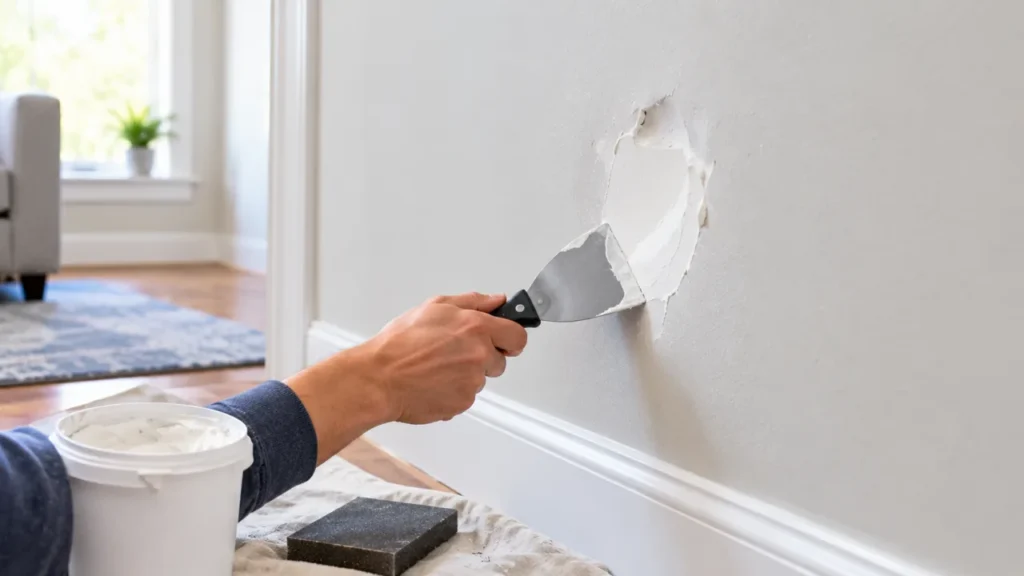
A dent in drywall can happen surprisingly easily. A door handle can hit the wall, furniture can leave a mark while being moved, or something heavy can fall against the surface. The damage may look small, but if you try to cover it without preparing the area properly, the repair can remain visible after painting.
The good news is that most small drywall dents don’t require replacing an entire section of the wall. With the right materials and a little patience, you can fill the damaged area, smooth the surface, and make the repair blend with the rest of the wall.
The first step is to figure out how serious the damage is. A shallow depression needs a different approach than a deep dent with cracked drywall or torn paper.
What Causes Dents in Drywall?
Drywall is strong enough for normal household use, but its gypsum core can be damaged by impact. Some common causes include:
• Door knobs hitting the wall
• Moving furniture
• Heavy objects falling against the wall
• Accidental bumps
• Children playing indoors
• Pets scratching or hitting the surface
• Home improvement work
• Furniture being pushed too close to a wall
Repeated impact can make a small dent worse. For example, if a door handle keeps hitting the same area, repairing the drywall without addressing the cause may only lead to another damaged spot.
Check the Damage Before You Start
Don’t immediately reach for the joint compound. Take a close look at the dent first.
A shallow dent usually has a smooth depression with the drywall paper still intact. This type of damage is often simple to repair with lightweight spackle or joint compound.
A deep dent may have crushed gypsum underneath the paper. It can also have cracks around the damaged area. These dents usually require more preparation and several thin coats of compound.
If the drywall paper is torn or loose, remove the damaged pieces before applying any filler. Covering loose paper can result in a weak repair.
A large opening or hole is different. If the drywall has been broken through, a drywall patch may be more suitable than trying to fill the entire area with compound.
What You Need to Repair a Drywall Dent
The exact materials depend on the size of the damage, but a basic repair usually requires:
• Lightweight spackle or joint compound
• Putty knife
• Fine sandpaper or sanding sponge
• Utility knife
• Clean cloth
• Drywall primer
• Matching wall paint
For a deeper dent or larger damaged area, you may also need drywall mesh, drywall tape, or a small piece of replacement drywall.
Having the materials ready before starting makes the repair easier and helps you avoid rushing through an important step.
How to Fix a Small Dent in Drywall
A small, shallow dent is usually the easiest type to repair. The main goal is to fill the depression without creating a raised patch around it.
1. Clean the Damaged Area
Start by wiping the wall around the dent with a clean, slightly damp cloth. Remove dust, dirt, grease, and loose particles.
Allow the area to dry completely before applying any repair material. Spackle and joint compound need a reasonably clean surface to bond properly.
2. Remove Loose Material
Look closely at the edges of the dent. If the drywall paper is peeling or there are loose pieces, carefully cut them away with a utility knife.
Don’t make the damaged area larger than necessary. Only remove material that is loose or prevents you from creating a stable surface.
3. Apply Spackle or Joint Compound
Use a putty knife to spread a thin layer of spackle or joint compound over the dent.
Press the material into the depression and then scrape the knife across the surface to remove excess compound. Extend the edges slightly beyond the damaged area so the repair can blend into the surrounding wall.
For a shallow dent, you don’t need to build a thick mound of compound.
4. Let It Dry
Give the compound enough time to dry according to the product instructions.
Drying time can vary based on the type of compound, the thickness of the application, temperature, humidity, and airflow in the room.
Don’t sand or add another coat while the material is still soft underneath.
5. Sand the Repair
Once the compound has dried completely, lightly sand the area with a sanding sponge or fine sandpaper.
The goal is to make the repaired section level with the surrounding wall. Avoid pressing too hard because aggressive sanding can damage the drywall paper around the repair.
Run your hand gently across the area after sanding. Your fingertips can often detect a small ridge or depression that may be difficult to see from a distance.
6. Add Another Coat if Necessary
If the dent is still visible or the surface isn’t completely level, apply another thin coat of compound.
Allow it to dry and sand it again. Several thin applications are usually better than trying to fill a depression with one thick layer.
How to Fix a Deep Dent in Drywall
Deep dents require more care because the gypsum core underneath the paper may have been compressed or broken.
Start by removing loose material and cleaning the damaged area. If the drywall has a large opening or unstable edges, filling alone may not be enough.
For a deep but contained dent, apply joint compound in thin layers. Let each coat dry before applying the next one. With each coat, spread the compound a little farther from the center of the repair.
This wider application helps create a gradual transition between the repaired section and the original wall. This technique is known as feathering.
Trying to fill a deep dent with one large application can cause excessive shrinking, cracking, or uneven drying. Thin layers give you better control over the final surface.
How to Repair Drywall With Torn Paper
Torn drywall paper needs to be handled before filling the dent.
If the paper is loose, cut away the damaged pieces with a utility knife. Don’t leave flaps underneath the new compound because they can lift later and make the repair uneven.
After removing loose material, make sure the area is clean and dry. Depending on the condition of the exposed surface, a suitable sealer or primer may be needed before applying compound.
Spread the joint compound over the damaged area and feather the edges. Once dry, sand gently and check the surface under good lighting.
How to Sand a Drywall Repair
Sanding is one of the steps that determines how well the repair will disappear after painting.
For initial smoothing, medium fine sandpaper or a sanding sponge can help remove ridges and high spots. A finer grit can then be used for the final pass.
Don’t focus only on the center of the repair. The outer edges matter just as much. If the edge of the compound forms a visible ridge, the painted repair can look like a raised patch.
Use light pressure and stop sanding once the surface feels smooth and even.
How to Match the Existing Wall Texture
A smooth repair on a textured wall can still stand out.
Before painting, look at the texture around the damaged area. Common wall finishes include smooth surfaces, orange peel texture, and knockdown texture.
If the original wall has texture, the repaired section may need to be textured in a similar way. The goal isn’t simply to cover the compound. The new texture should transition naturally into the surrounding surface.
Texture matching can take some practice because the pattern, thickness, and application method all affect the final appearance.
How to Prime and Paint the Repaired Area
Don’t rush straight to the final paint.
The joint compound and spackle can absorb paint differently from the existing wall. Without primer, the repaired section may appear lighter, darker, or have a different sheen after painting.
Apply a suitable drywall primer once the repair is completely dry and smooth.
After the primer dries, apply matching paint. If possible, use the same paint and finish that was previously used on the wall.
A small repair may blend easily, but older paint can fade or change over time. In that situation, painting a slightly larger section may produce a more consistent appearance than covering only the repaired spot.
Common Mistakes to Avoid When Fixing a Drywall Dent
A few simple mistakes can make a small repair much more noticeable.
Using too much compound: A thick layer can take longer to dry and may shrink or crack.
Skipping surface preparation: Dust, grease, or loose drywall material can interfere with adhesion.
Sanding too aggressively: Heavy sanding can damage the paper facing and create another problem.
Applying another coat too soon: The surface may feel dry while the material underneath is still soft.
Skipping primer: The repaired area may absorb paint differently from the surrounding wall.
Ignoring wall texture: A smooth patch can stand out on a textured surface.
Painting before the repair is ready: Paint won’t hide an uneven or poorly sanded surface.
When Does a Drywall Dent Need a Patch?
Not every dent can be repaired effectively with spackle or joint compound.
A drywall patch may be necessary when:
• The damage has created a large hole
• The gypsum core is badly broken
• The edges of the opening are unstable
• A large section of drywall is crushed
• There is extensive paper damage
• The repair would require an unusually thick layer of compound
For larger damage, the damaged section may need to be cut back to solid drywall before installing a replacement piece.
How to Prevent Another Drywall Dent
Once the repair is finished, think about what caused the damage.
If a door handle created the dent, installing a door stop can prevent another impact. Furniture that repeatedly touches the wall may need to be repositioned. During moving or renovation work, protect finished walls from tools, furniture, and other heavy objects.
These small changes can save you from repairing the same section again.
Conclusion
Fixing a drywall dent is usually straightforward when you take the time to prepare the damaged area properly. Start by identifying how deep the dent is and whether the drywall paper or gypsum core has been damaged. Small dents can often be filled with spackle, while deeper damage may need several coats of joint compound.
Good sanding, proper feathering, primer, and matching the existing wall texture all make a difference in the final result. Most importantly, don’t rush the drying process or try to hide a serious hole with filler alone.
For homeowners who need help with drywall repairs and other home improvement work, Getz Handyman can help with professional drywall repair in las vegas.
Frequently Asked Questions
Can you fix a dent in drywall without replacing it?
Yes. Most small and shallow dents can be repaired with spackle or joint compound. Deeper damage or large holes may require a drywall patch.
Should I use a spackle or joint compound for a drywall dent?
Lightweight spackles work well for small, shallow dents. Joint compound is useful for larger or deeper repairs where multiple thin coats are needed.
How long does drywall compound take to dry?
Drying time depends on the product, thickness, temperature, humidity, and airflow. Always follow the drying instructions provided with the compound you’re using.
What sandpaper should I use for drywall repair?
Medium fine sandpaper or a sanding sponge can be used to smooth the repair, followed by a finer grit for finishing. Use light pressure to avoid damaging the drywall paper.
Do I need primer after fixing a drywall dent?
Primer is recommended because spackle and joint compound can absorb paint differently from the existing wall. Priming helps create a more consistent surface before painting.
How do you fix a deep dent in drywall?
Clean the area, remove loose material, and apply joint compound in thin layers. Allow each coat to dry, feather the edges, and sand the surface before priming and painting.
Can you paint directly over a repaired drywall dent?
It’s better to prime the repaired area first. Painting directly over compounds can leave a noticeable difference in color or sheen.
When should a drywall dent be patched instead of filled?
Consider a patch when the drywall has a large hole, severely damaged gypsum, unstable edges, or extensive damage that can’t be reasonably filled with compound.