
How to Fix a Door That Won’t Latch: 6 Simple Fixes
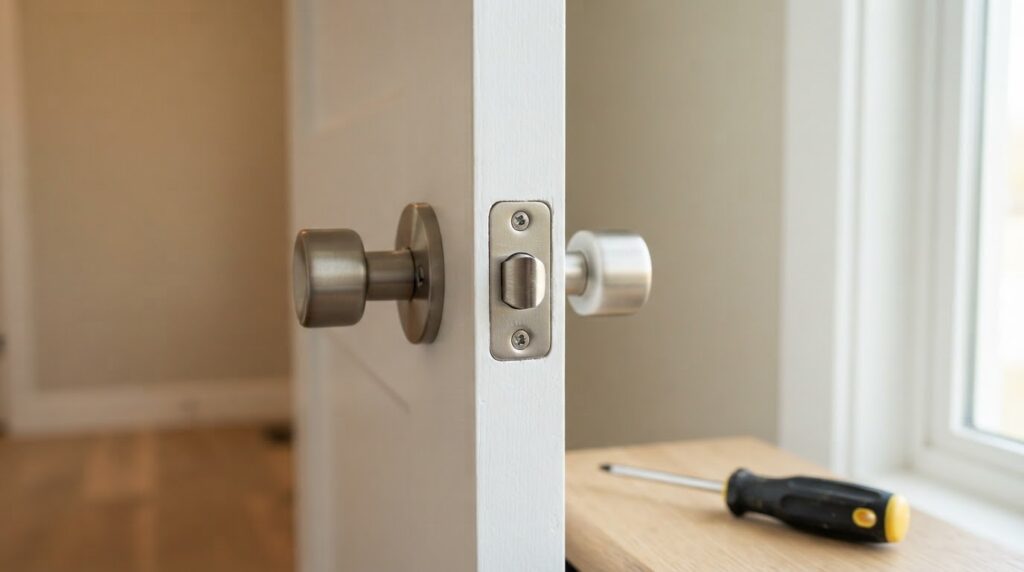
If you’re wondering how to fix a door that won’t latch, start by finding where the latch bolt misses the strike plate on the door frame. Most of the time the fix is simple: tighten loose hinge screws, shim a hinge, or move or file the strike plate. You rarely need a new door, just a door that lines up again.
A door that won’t stay shut costs you privacy, and an exterior door that won’t click closed can’t be locked and leaks cooled air. Here’s how to diagnose it and the six fixes that work most often.
Why Won’t My Door Latch?
The latch bolt is the spring-loaded tongue on the edge of the door. To hold the door shut, it has to slide into the opening in the strike plate on the jamb. When it doesn’t, something has shifted. The usual culprits are:
- Loose hinge screws that let the door sag on the latch side
- A strike plate that has moved or was installed slightly off
- House settling that pushes the door frame out of square
- Wood that shrinks or swells with temperature and humidity changes
- Thick paint buildup or new weatherstripping that stops the door from closing fully
- A worn or broken latch mechanism inside the door
Why Doors in Desert Homes Drift Out of Alignment
Homes in Las Vegas deal with very dry air most of the year, triple-digit summer heat and short bursts of humidity during monsoon season. Wood doors and jambs shrink and swell with those swings, and houses settle over time. A door that latched fine in spring can start missing the strike plate by mid-summer, which is why door checks belong on any seasonal home maintenance checklist for desert homes.
How Do You Find Where the Latch Is Missing?
A two-minute check tells you which fix to try first.
- Close the door slowly and watch the latch bolt as it meets the strike plate.
- Note whether it hits above the opening, below it, or never quite reaches the plate.
- Rub lipstick, chalk or a dry-erase marker on the latch bolt, close the door gently, and look at the mark it leaves on the strike plate.
- Check the gap between the door and the frame along the top and the latch side. A gap that is wider at one corner than the other usually means the door is sagging.
6 Ways to Fix a Door That Won’t Latch
Work through these in order; the first two are the easiest.
1. Tighten the Hinge Screws
Open the door and tighten every hinge screw, starting with the top hinge, which carries most of the door’s weight. If a screw just spins, the hole is stripped. Swap one screw in the top hinge for a 2½- to 3-inch screw that bites into the wall framing behind the jamb. This pulls the top of the door back toward the hinge side and lifts the latch.
For other stripped holes, pack them with wood glue and toothpicks or golf tees, let the glue dry, trim it flush and drive the screw back in.
2. Shim a Hinge
A thin shim of cardboard or plastic behind one hinge leaf tilts the whole door. A shim behind the bottom hinge raises the latch side; a shim behind the top hinge lowers it. Shims behind all the hinges move the door closer to the latch jamb, which helps when the latch doesn’t reach the plate at all.
3. Move the Strike Plate
If the latch misses by more than about ⅛ inch, relocate the strike plate. Remove it, fill the old screw holes with glue and wood plugs or toothpicks, and mark the new position from your lipstick test. Chisel the recess (the mortise) so the plate sits flush, screw it in place, then fill any exposed gap with wood filler and touch up the paint.
4. File or Enlarge the Strike Plate Opening
For small misses of ⅛ inch or less, take the plate off and file the edge of the opening with a metal file or a rotary tool. Remove a little at a time and test often so the latch doesn’t rattle. Also check that the pocket in the wood behind the plate is deep enough for the latch to extend fully, and chisel it deeper if needed.
5. Remove Paint Buildup or Adjust Weatherstripping
If you have to push hard to close it, the door may be binding. Look for thick paint on the door edge or the door stop, sand it down and seal any bare wood. On exterior doors, new or overly thick weatherstripping can hold the door open a hair. A thinner seal or a small strike plate adjustment usually takes care of it.
6. Replace a Worn Latch
If the latch bolt sticks, doesn’t spring back out, or the knob turns without pulling it in, the mechanism is worn. A shot of dry graphite lubricant sometimes revives it; otherwise replace the latch or the whole knob set. Measure the backset (the distance from the door edge to the center of the knob hole, usually 2⅜ or 2¾ inches) before you buy. Lock maker Schlage publishes a helpful guide to troubleshooting a door that won’t latch after a new lock is installed.
Rather skip the chiseling and guesswork? Our door repair service handles hinge, latch and strike plate adjustments for interior and exterior doors.
Which Fix Matches Your Door’s Symptom?
| What you see | Likely cause | Try this first |
|---|---|---|
| Latch hits below the strike opening | Door sagging on loose hinges | Tighten top hinge, add a long screw, or shim the bottom hinge |
| Latch hits above the strike opening | Strike plate set low or frame shifted | File the opening or raise the strike plate |
| Latch doesn’t reach the plate | Gap between door and jamb too wide | Shim behind the hinges or move the strike plate |
| Door closes, then pops open | Latch not seating deep enough | Deepen the pocket behind the plate; check weatherstripping |
| Latch sticks or won’t spring out | Worn latch mechanism | Lubricate with graphite or replace the latch |
When Should You Call a Pro?
Some latch problems point to something bigger. Bring in help when:
- The door itself is warped or the jamb is cracked or split
- You’ve already moved the strike plate and the door drifted out of line again
- It’s an exterior door and you’re worried about security
- You’re upgrading to a new lockset, deadbolt or smart lock and want it fitted correctly
For new knobs, levers and deadbolts, see our door hardware installation service. If several doors stop latching at once and you also see new cracks in drywall or stucco, the house may be moving more than normal. In that case, have a licensed contractor or structural engineer take a look before adjusting doors.
Frequently Asked Questions
Why does my door only latch when I slam it?
Slamming forces a misaligned latch past the edge of the strike plate. It usually means the plate is slightly out of line or something, like thick paint or weatherstripping, is resisting the door. Adjusting or filing the strike plate normally ends the need to slam it.
Can lubricating a door latch fix it?
Only if the latch bolt itself is sticking. Dry graphite or a silicone spray can free up a sluggish latch, but it won’t help when the bolt and strike plate are misaligned. Do the lipstick test first to see which problem you have.
How much does it cost to fix a door that won’t latch?
Cost depends on the cause. Tightening hinges or adjusting a strike plate is a short job, while replacing hardware, repairing a split jamb or rehanging a warped door takes more time and materials. Exterior doors and specialty locks also add to the price.
Need Help With a Door That Won’t Latch?
If you’d rather have it done right the first time, Getz Handyman fixes sagging doors, misaligned strike plates and worn latches across Las Vegas, Henderson, Summerlin and North Las Vegas. Request a free quote online or call (702) 497-8423.