
How to Fix a Sagging Cabinet Door: Step-by-Step Guide
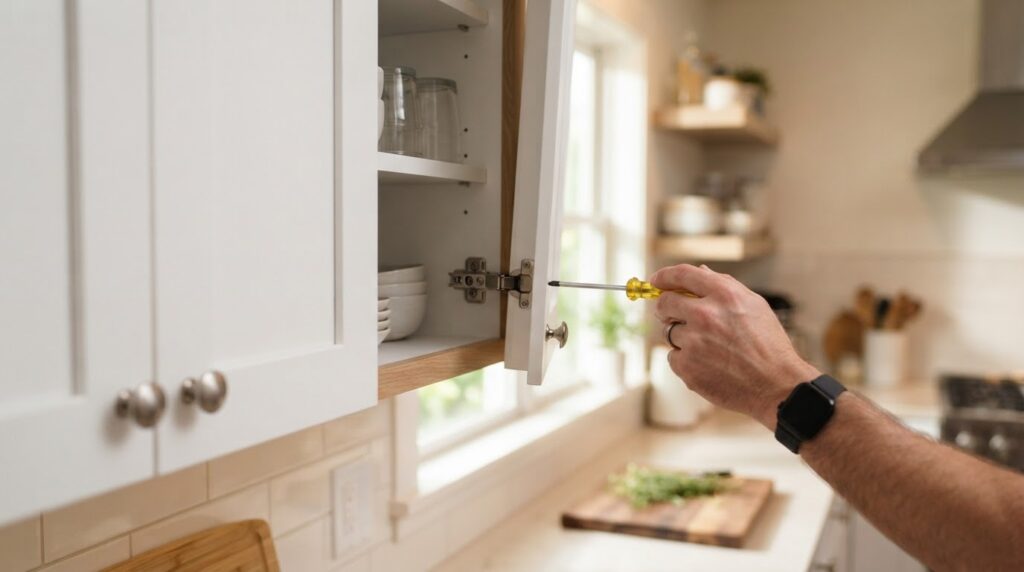
To fix a sagging cabinet door, start by tightening the hinge screws, then use the adjustment screws on the hinge to raise the door and line it up with its neighbors. If a screw just spins in place, the hole is stripped: fill it with glue and wooden toothpicks or a dowel, let it dry, and drive the screw back in. Most droopy cabinet doors can be fixed in 15–30 minutes with nothing more than a screwdriver.
Below, we walk through why cabinet doors droop, how to adjust the common concealed (European-style) hinge, how to repair stripped holes in wood and particleboard, and when it makes more sense to replace the hinge or call in help.
Why Do Cabinet Doors Start to Sag?
A cabinet door hangs from just two or three small hinges, and every time it swings, those hinges take a little stress. Over the years, that adds up. The most common causes are:
- Loose hinge screws that have backed out from daily use.
- Stripped screw holes, especially in particleboard or MDF cabinet boxes.
- Hinges knocked out of adjustment by kids hanging on doors or heavy towels draped over them.
- Worn or bent hinges, including soft-close hinges that have lost their spring.
- Water damage under sinks, where a slow leak swells particleboard so screws no longer grip.
Climate plays a part too. In Las Vegas, the very dry air and big swings between summer heat and winter cool make wood shrink and move slightly, which can loosen screws over time. Slow leaks and hard-water drips under kitchen and bathroom sinks are another common reason the bottom of a cabinet box breaks down.
What Tools Do You Need?
- A #2 Phillips screwdriver (a Pozidriv bit fits many European hinges better)
- Wood glue and wooden toothpicks, golf tees or a small hardwood dowel
- A utility knife or flush-cut saw to trim the filler
- Painter’s tape and a pencil to mark the door’s position
- Replacement hinges, if the old ones are bent or worn out
How to Fix a Sagging Cabinet Door Step by Step
Work through these steps in order. Many doors are fixed by step 2, so there’s no reason to take anything apart until you need to.
1. Find the Problem Hinge
Open the door and gently lift the handle side. Watch both hinges: the one that shifts, gaps or wiggles is your culprit. On a drooping door, it’s usually the top hinge, since it carries most of the pulling force.
2. Tighten Every Hinge Screw
Snug up the screws that hold the hinge to the door and the mounting plate to the cabinet. Turn them firmly, but stop once they’re tight; overtightening is exactly how holes get stripped. Close the door and check the gap.
3. Adjust the Concealed Hinge
Most modern cabinets use concealed hinges with built-in adjustment screws, so you can realign a crooked door without removing it. The exact layout varies by brand, so check the hinge manufacturer’s adjustment instructions if yours looks different. In general:
- Side-to-side: the screw closest to the door moves it left or right to even out the gap between doors.
- Height: usually set at the mounting plate on the cabinet wall, with slotted screws or a small cam, to raise or lower the door.
- Depth: the screw farther back moves the door in or out so it sits flush against the cabinet frame.
Make quarter-turn adjustments, adjust both hinges by the same amount when moving the whole door, and close the door after each change to check your progress.
4. Repair Stripped Screw Holes
If a screw spins without tightening, the wood fibers around it are gone. Mark the door’s position with tape, remove the hinge, then:
- Dip a few wooden toothpicks (or a golf tee) in wood glue and pack them tightly into the hole.
- Let the glue dry fully, ideally overnight.
- Trim the filler flush with a utility knife.
- Drill a small pilot hole and drive the original screw back in.
A slightly longer or thicker screw can also work, but measure first so it can’t poke through the face of the door or the outside of the cabinet. For badly crumbled particleboard, drilling out the hole and gluing in a hardwood dowel gives screws much better grip.
5. Replace Worn or Damaged Hinges
If a hinge is bent, its adjustment screws are stripped, or a soft-close hinge slams instead of closing gently, replace it. Take the old hinge to the store or note the brand, opening angle and overlay so the new one fits the existing holes. If you’re updating several doors at once, our cabinet hardware installation service can swap hinges, pulls and knobs in one visit.
Quick Guide: Matching the Fix to the Problem
| What You Notice | Likely Cause | Best Fix |
|---|---|---|
| Door droops but screws feel tight | Hinge out of adjustment | Adjust height and side screws |
| Hinge wiggles when you lift the door | Loose screws | Tighten screws |
| Screw spins and won’t tighten | Stripped hole | Toothpicks and glue, or a dowel |
| Hinge cup pulling out of the door | Damaged door material | Repair insert, new hinge location or new door |
| Soft, swollen wood under the sink | Water damage | Fix the leak, then repair or replace the panel |
When Should You Call a Pro?
A single loose hinge is a great DIY job. It’s worth getting help when the hinge cup has torn out of the door, the cabinet side is swollen from water, several doors are out of line at once, or the cabinet box itself is pulling away from the wall. Those signs point to a bigger repair than a hinge tweak.
If water damage is involved, fix the leak first; if it’s coming from a supply line or drain, a licensed plumber may be needed. When you’d rather have it done right the first time, our cabinet repair service handles sagging doors, stripped holes and damaged cabinet panels.
How to Keep Cabinet Doors From Sagging Again
- Check and snug hinge screws once or twice a year.
- Don’t hang heavy towels or bags on cabinet doors.
- Let soft-close hinges do their job instead of slamming doors.
- Look under sinks for drips or swollen wood during routine checks.
Adding a quick hinge check to your seasonal routine helps; our home maintenance checklist for Las Vegas homeowners is a good place to start.
Frequently Asked Questions
Why won’t my cabinet door stay closed?
Usually the hinge is out of adjustment or its closing spring is worn. Try the depth and side adjustments first. If the door still drifts open, the hinge likely needs replacing.
Can you fix a cabinet hinge that pulled out of particleboard?
Often, yes. Small screw holes can be filled with glue and a hardwood dowel, and hinge repair plates or inserts can rebuild a damaged area. If the hinge cup hole itself is torn out, the hinge may need a new location or the door may need replacing.
How do you fix uneven gaps between cabinet doors?
Use the side adjustment screw on each hinge to move the doors left or right until the gap is even from top to bottom. Then use the height adjustment so the top edges line up.
How long does it take to fix a sagging cabinet door?
Tightening and adjusting hinges takes about 15–30 minutes per door. Repairing stripped holes adds drying time for the glue, so plan to finish that job the next day.
Get Your Cabinet Doors Hanging Straight Again
Sagging doors, stripped hinges or a cabinet that’s seen better days? Getz Handyman helps homeowners across the valley with cabinet repairs big and small. Request a free quote online or call us at (702) 497-8423.