
How to Hide TV Wires Above a Fireplace
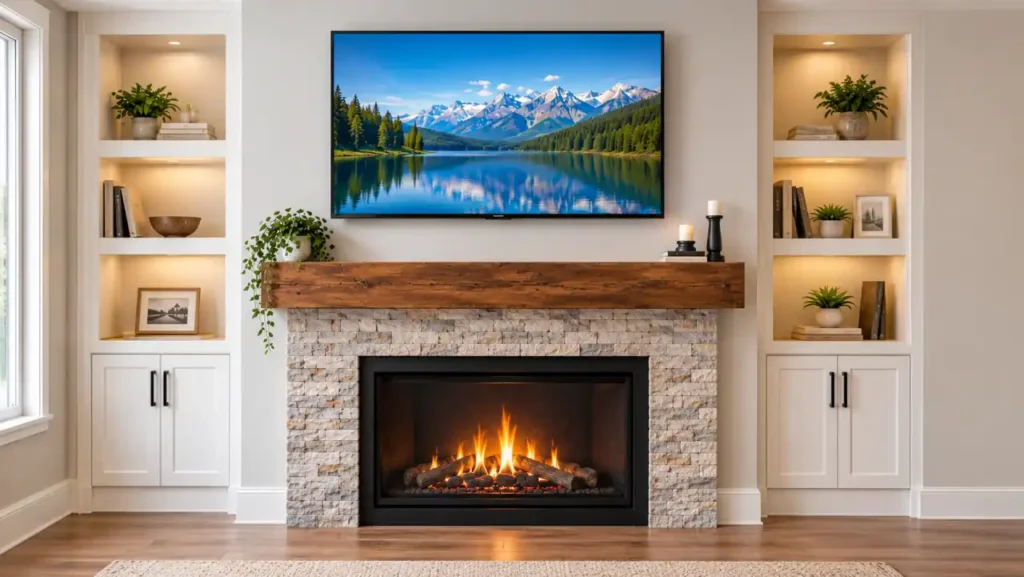
A TV mounted above a fireplace can look neat and balanced, but visible cables can quickly take away from the clean appearance. Fortunately, there are several ways to hide TV wires without creating a messy wall.
The right method depends on your fireplace type, wall construction, number of cables, and whether you want a temporary or permanent solution. A paintable raceway is simple for most DIY projects, while in-wall wiring can provide a cleaner finish when the wall is suitable.
Before starting, check the fireplace manufacturer’s clearance requirements and the TV manufacturer’s recommendations. Heat, vents, electrical wiring, and gas lines can all affect how and where you route cables.
Before You Hide the Wires: Check Fireplace and TV Safety
Before drilling or cutting anything, take a few minutes to inspect the area.
Is It Safe to Put a TV Above a Fireplace?
A TV can be installed above some fireplaces, but there isn’t one safe distance that applies to every setup. Fireplace design, heat output, mantel depth, ventilation, and the TV itself all matter.
Check the installation instructions for both the fireplace and TV. If the area above the fireplace becomes too hot, it can shorten the life of the television or cause damage.
Check What Is Behind the Fireplace Wall
The wall may contain more than drywall and empty space. Before creating an opening, consider:
- Electrical wiring
- Gas lines
- Fireplace vents
- Flues and chimney components
- Wall studs
- Insulation
- Masonry or structural materials
If you’re unsure what’s behind the wall, don’t drill blindly.
Don’t Put a Standard Extension Cord Inside the Wall
A regular extension cord or the TV’s factory power cord shouldn’t simply be hidden inside drywall. Electrical wiring has different requirements from low-voltage cables such as HDMI or Ethernet.
If the TV needs a new electrical outlet, use an appropriate electrical installation and consider hiring a qualified electrician.
1. Use a Paintable Cable Raceway
A paintable cable raceway is one of the easiest ways to hide TV wires without opening the wall. It creates a narrow channel that holds the cables and can be painted to match the wall.
This option works well for renters, finished walls, brick fireplaces, and homeowners who want to avoid drywall repairs.
How to Install a Cable Raceway
- Plan the shortest practical route from the TV to the outlet or equipment.
- Measure the required length.
- Choose a raceway large enough for all the cables.
- Test the placement before attaching it.
- Cut the sections to size.
- Install the raceway according to the manufacturer’s instructions.
- Place the cables inside and close the cover.
- Paint the raceway to blend with the wall.
Leave enough cable slack if the TV uses a tilting or swiveling mount.
2. Run Low-Voltage Cables Inside the Wall
If you want the wires to be almost completely invisible, you may be able to route low-voltage cables through the wall.
This can include:
- HDMI cables
- Ethernet cables
- Optical audio cables
- Speaker cables
First, determine whether the wall cavity is suitable for cable routing. Use cables with the appropriate rating for concealed installation.
The TV’s power connection is a separate issue. Don’t treat an electrical power cord like an HDMI cable. If a new outlet is needed behind the TV, the electrical portion should be installed correctly and according to applicable requirements.
3. Install a Recessed TV Outlet and Media Box
A recessed outlet can create a cleaner appearance behind a wall-mounted TV by keeping the connection farther inside the wall.
A recessed media box can also provide connection points for HDMI, Ethernet, and other equipment.
This setup works particularly well when several devices connect to the TV. Plan the location before mounting the television so the outlet and media connections don’t interfere with the TV bracket.
4. Install Conduit for Future-Proof Wiring
If you’re already opening the wall during a renovation, conduit can make future cable changes much easier.
Instead of permanently burying one set of cables, conduit gives you a pathway for future upgrades. You may eventually want a newer HDMI cable, Ethernet connection, speaker wire, or another media connection.
Adding a pull string inside the conduit can make replacing or adding cables easier later without opening the wall again.
5. Hide the Wires Behind or Along the Fireplace Mantel
A mantel can provide a natural place to conceal cables when opening the wall isn’t practical.
Depending on the fireplace design, cables can sometimes be routed along the back or less visible portion of the mantel before continuing toward an outlet or nearby cabinet.
Keep wires away from hot surfaces and maintain the fireplace’s required clearances. Don’t use the mantel as a cable route if it exposes wires or equipment to excessive heat.
This approach can be particularly useful with brick, stone, or other difficult-to-modify fireplace surfaces.
6. Route Cables to a Nearby Cabinet or Media Console
Your streaming device, game console, cable box, or receiver doesn’t necessarily need to sit directly below the TV.
A nearby media cabinet can keep these devices organized while allowing the cables to run between the TV and equipment.
When using this setup:
- Keep electronics properly ventilated.
- Avoid placing devices where fireplace heat can reach them.
- Use suitable cable management for HDMI and Ethernet connections.
- Keep frequently used connections accessible.
This can reduce the number of visible wires around the fireplace.
7. Use Wireless Connections Where Practical
Wireless technology can reduce cable clutter. Wi-Fi can handle many streaming devices, while Bluetooth can connect compatible speakers and accessories.
However, wireless doesn’t remove every cable. The TV still needs power, and some setups benefit from wired Ethernet or HDMI connections.
Think of wireless equipment as a way to reduce the number of cables rather than a complete replacement for cable management.
How to Hide TV Wires on Different Fireplace Surfaces
The best cable-hiding method can change depending on the surface around your fireplace.
How to Hide TV Wires Above a Brick Fireplace
A surface raceway can follow the brick or a less noticeable edge. You can choose a paintable option that blends with the surrounding area.
Avoid drilling into brick unless you understand the construction and know that the location is suitable.
How to Hide TV Wires Above a Stone Fireplace
Stone can be difficult to cut or drill without damaging the finish. A surface-mounted raceway or a route behind the mantel may be less invasive.
How to Hide TV Wires Above a Tile Fireplace
Drilling through tile can cause cracks or chips. If you don’t need an in-wall installation, a carefully positioned cable cover may be a simpler solution.
How to Hide TV Wires on a Drywall Fireplace Wall
A suitable drywall cavity can provide more options, including concealed low-voltage wiring, recessed media boxes, and properly installed electrical connections.
How to Hide TV Wires Without Cutting Into the Wall
If you don’t want to damage the drywall, a paintable raceway is usually the simplest solution.
Measure the route carefully and keep it as short and straight as possible. After installation, painting the raceway the same color as the wall can make it much less noticeable.
You can also use the mantel, fireplace surround, or nearby furniture to help disguise the cable path.
How to Hide TV Wires If the TV Is Already Mounted
You don’t always need to remove a mounted TV to manage its cables.
Measure the route from the TV to the outlet and choose a cable management system that can be installed around the existing setup. If the TV uses a movable mount, leave enough slack so the cables aren’t stretched when the screen tilts or swivels.
Make sure cables aren’t being pinched between the TV and mounting bracket.
How to Hide the Most Common TV Cables
TV Power Cable
TV power connections need to be handled differently from HDMI, Ethernet, and other low-voltage cables. Never hide a regular extension cord or standard TV power cable behind the drywall. If the TV needs a dedicated outlet, have a suitable electrical connection installed for the setup.
HDMI Cable
HDMI wiring carries signals between your television and devices such as gaming systems, streaming players, soundbars, and AV receivers. When the cable needs to pass through the wall, make sure you use a cable that is designed and rated for in-wall use.
Ethernet Cable
An Ethernet cable gives compatible TVs and streaming equipment a stable wired internet connection. You can keep the cable out of sight by running it through a suitable cable channel or an approved route inside the wall.
Soundbar Cable
A soundbar can connect to the TV through HDMI ARC or eARC, optical audio, or other supported connections. Keep the audio cable and power lead neatly routed so they don’t hang below the screen or create visible clutter around the fireplace.
Gaming and Streaming Device Cables
If you have a game console or streaming device, consider placing it in a nearby cabinet and routing the required cables through a planned cable-management path.
Common Mistakes to Avoid
- Running a regular extension cord inside the wall: Use a properly installed electrical solution instead.
- Ignoring fireplace heat and clearance: Check the fireplace and TV manufacturer’s requirements before installation.
- Drilling without checking behind the wall: Look out for studs, wiring, gas lines, vents, and other obstacles.
- Using the wrong cables for in-wall installation: Use cables appropriately rated for concealed installation.
- Leaving cables too tight: Allow enough slack for a tilting or swiveling TV mount.
- Forgetting future upgrades: Consider conduit if you expect to replace or add cables later.
- Blocking fireplace vents: Keep cable covers and wiring away from areas that require proper airflow.
How to Choose the Best Method
| Method | Cost | Difficulty | Best For |
| Paintable raceway | Low | Easy | Renters and DIY projects |
| Flat cable cover | Low | Easy | Simple cable runs |
| In-wall wiring | Medium | Moderate | Clean, permanent installations |
| Recessed outlet/media box | Medium to high | Moderate | Professional-looking setups |
| Conduit | Medium | Moderate | Future upgrades |
| Mantel routing | Low to medium | Easy to moderate | Brick and stone fireplaces |
| Wireless connections | Medium | Easy | Reducing cable clutter |
The best method isn’t necessarily the one that makes every cable disappear. It should also keep the wiring safe, accessible, and suitable for the fireplace and wall construction.
How Much Does It Cost to Hide TV Wires Above a Fireplace?
The price of hiding TV wires above a fireplace varies depending on the method you choose and the condition of the wall. A simple DIY solution, such as a cable raceway or wire cover, usually costs less than a concealed installation.
Running cables inside the wall, adding a recessed media box, installing conduit, or putting in a new electrical outlet can increase the overall cost. These options may require additional materials, wall repairs, or professional help.
If your project involves electrical wiring or a new outlet, have the setup assessed by a qualified professional before starting the work. Choose the safest option for your home rather than basing the decision only on the lowest cost.
Conclusion
Hiding TV wires above a fireplace starts with choosing the right method for your wall, fireplace, and equipment. A paintable raceway is a practical choice when you don’t want to cut into the wall, while in-wall wiring, recessed connections, and conduit can provide a cleaner permanent setup.
Always check fireplace heat and clearance requirements before beginning, and never compromise electrical or fire safety just to make cables disappear. With proper planning, you can keep HDMI, Ethernet, soundbar, and other TV cables organized without making the fireplace wall look cluttered.
If you need help creating a clean entertainment setup, contact Getz Handyman for professional TV mounting and shelf Installation in Las Vegas.
Frequently Asked Questions
Who provides best TV mounting and installation services in Las Vegas?
Getz Handyman provides TV mounting and installation services in Las Vegas, including secure TV mounting, wire management, and shelf installation. Homeowners can contact the team for help setting up a clean and organized entertainment area.
Can I run TV wires through the wall above a fireplace?
Suitable low-voltage cables may be routed through a wall when the construction and installation allow it. Check for electrical wiring, gas lines, vents, and other obstacles first.
Can I hide TV wires without cutting the wall?
Yes. A paintable raceway or cable cover can hide wires without opening the drywall.
Is it safe to put a TV above a fireplace?
It depends on the fireplace, TV, heat output, and required clearances. Always follow the manufacturer’s installation instructions.
Can I run an extension cord inside the wall?
A standard extension cord shouldn’t simply be buried inside a wall. Use an appropriate electrical solution instead.
How do I hide TV wires above a brick fireplace?
A surface raceway, mantel route, or nearby media cabinet can help conceal the wires without requiring extensive masonry work.
How do I hide a soundbar wire?
You can route the soundbar cable through a suitable raceway, behind an appropriate mantel route, or through a properly planned concealed cable path.
Do I need an electrician to hide TV wires?
If the project involves installing or modifying electrical wiring or adding an outlet, professional electrical assistance may be appropriate. Low-voltage cable management is a different type of work.