
Can You Grout Over Old Grout? What Works and What Fails
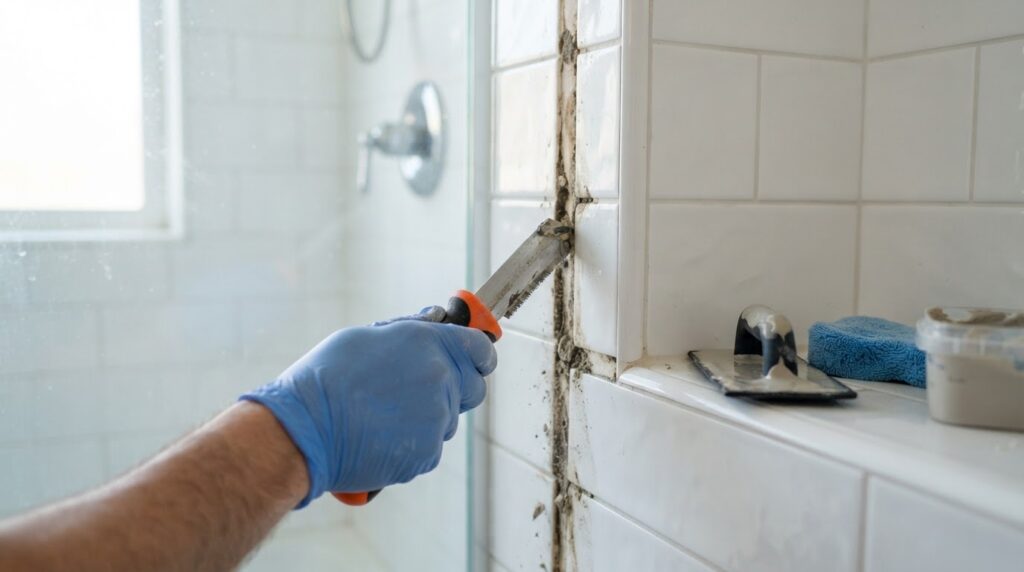
Can you grout over old grout? Technically yes, but a thin layer of new grout smeared over the old lines rarely lasts. New grout needs room and a clean, rough surface to grip, so most of the old grout has to be cut out first. If you skip that step, the fresh layer tends to crack, flake or pop loose within months, especially in a shower.
The good news is that you rarely need to replace the tile itself. Below we explain why grouting over grout fails, the one situation where a partial top-up can work, how proper regrouting is done, and which cheaper fixes make sense when the grout is only stained.
Why Doesn’t New Grout Stick to Old Grout?
Grout works by filling the joint between tiles and locking onto the tile edges on both sides. When the joint is already full, there is nowhere for new material to go except a paper-thin skin on top. That skin has almost nothing to hold on to.
Here is what usually goes wrong:
- Poor bond: Cured, sealed or soap-coated grout is smooth, so the new layer can’t key into it.
- Too thin to be strong: Cement grout needs depth to cure properly. A shallow layer dries brittle and chips.
- Uneven color: The old grout often shows through in patches, so the joints look blotchy.
- Hidden problems stay hidden: If the grout cracked because of movement, a loose tile or water behind the wall, covering it just buys time.
When Can You Add Grout Over Existing Grout?
There is one reasonable exception. If the old grout is solid and well bonded but has small pinholes, light surface wear or a few low spots, you can scrape and clean those areas and pack in matching grout. This is a touch-up, not a full regrout.
For it to hold, a few conditions should be true:
- The existing grout doesn’t crumble when you scratch it with a key or a utility knife.
- The tiles are firmly attached and don’t sound hollow when tapped.
- You use the same type of grout (sanded, unsanded or epoxy) and a close color match.
- The area is thoroughly cleaned of soap scum, sealer and mineral buildup first.
If the grout is cracked along a long line, missing in chunks or soft and sandy, it needs to come out.
How Do You Regrout Tile the Right Way?
Proper regrouting means removing enough old grout that the new grout can fill a real joint. Many tile pros aim to remove at least about 1/8 inch, and more is better when the old grout is failing. Here is the general process:
- Inspect first. Tap tiles to check for hollow spots and look for soft drywall, staining or mold around the area.
- Remove the old grout. Use a carbide grout saw or an oscillating tool with a grout blade. Work slowly so you don’t chip tile edges.
- Clean out the joints. Vacuum the dust, then wipe the joints with a damp sponge. Dust left behind weakens the bond.
- Mix and pack the grout. Press it in diagonally with a rubber float so the joints fill completely.
- Wipe and shape. Remove excess with a lightly damp sponge once the grout firms up, then buff off the haze.
- Caulk corners and changes of plane. Where walls meet the tub or floor, use flexible caulk instead of grout so movement doesn’t crack it.
- Let it cure, then seal. Follow the grout manufacturer’s cure time before using the shower and before applying a penetrating sealer.
Removing grout is slow, dusty work, and a slipped blade can scratch tile you can’t easily replace. If you’d rather skip it, our regrouting and grout repair service handles the removal, regrouting and sealing for you.
What Are the Alternatives to Regrouting?
Not every grout problem needs new grout. If the lines are sound but dingy or the wrong color, a lighter fix may be enough.
| Option | Best for | Limitations |
|---|---|---|
| Deep cleaning | Dirty or dull grout that is otherwise solid | Won’t fix cracks or permanent stains |
| Grout colorant or stain | Discolored grout or a color change | Grout must be clean and intact |
| Grout pen | Small areas and quick touch-ups | Wears off faster in wet areas |
| Partial regrout | A few damaged joints | Color may not match perfectly |
| Full regrout | Cracked, crumbling or moldy grout | Most time and labor |
One shortcut to avoid is caulking over grout lines on walls and floors. Caulk over cement grout often peels and can trap moisture behind it. Caulk belongs at corners and joints where surfaces meet, which is covered in our guide on how often caulking should be replaced.
Why Does Grout Wear Out Faster in Las Vegas?
Southern Nevada has very hard water. Minerals left behind after each shower build up on grout, and scrubbing them off with harsh or acidic cleaners slowly erodes cement grout and strips sealer. That’s why many Las Vegas showers end up with rough, sunken or chalky grout lines.
A few habits help grout last longer:
- Squeegee or towel-dry shower walls after use to limit mineral spots.
- Use pH-neutral cleaners made for tile and grout rather than strong acids.
- Reseal cement grout periodically, following the sealer maker’s directions.
- Run the bathroom fan during and after showers to cut down on lingering moisture.
When Is It More Than a Grout Problem?
Sometimes failing grout is a symptom. Call in help before regrouting if you notice loose or hollow-sounding tiles, soft or stained wall areas outside the shower, a musty smell, or grout that keeps cracking in the same spot. Those can point to water getting behind the tile.
Loose tiles usually need to be reset before any grouting, which falls under tile repair. If you suspect moisture inside the wall, our post on how to find hidden mold in your house covers the warning signs, and the EPA’s guide to mold, moisture and your home explains cleanup basics. Leaks from valves or supply lines may require a licensed plumber.
Frequently Asked Questions
Do I have to remove all the old grout before regrouting?
Not always all of it, but you need to remove enough depth for the new grout to bond and be strong, typically at least about 1/8 inch. Any grout that is loose, cracked or crumbling should come out completely.
How long does regrouting a shower take?
Removing and replacing grout in a standard shower is usually a one-day job, with most of the time spent on removal. You’ll then need to wait for the grout to cure, per the manufacturer’s directions, before using the shower or sealing it.
Can I change my grout color without regrouting?
Yes. If the grout is clean and intact, a grout colorant or stain can change its color or cover discoloration. It won’t fix cracks, so damaged joints still need repair first.
Is epoxy grout better for regrouting?
Epoxy grout resists stains and water better than cement grout and doesn’t need sealing, which helps in hard-water areas. It is harder to work with and costs more, and the old grout still needs to be removed to the right depth.
Get Your Grout Fixed the Right Way
If your shower or floor grout is cracked, stained or crumbling, Getz Handyman can remove the old grout, regrout and seal it so it lasts. Request a free quote or call us at (702) 497-8423.